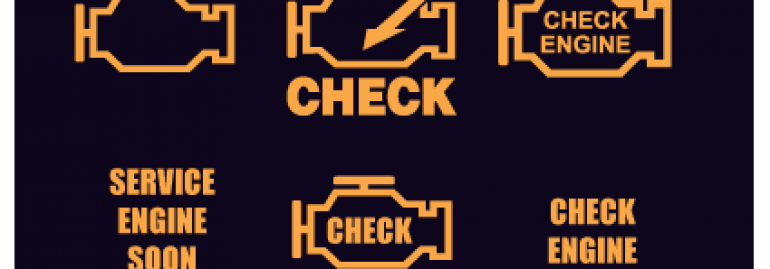
For decades, the relationship between a driver and their vehicle’s transmission has been defined by a single, stressful indicator: the check engine light. Most vehicle owners and even many amateur mechanics operate under the assumption that if the dashboard is dark, the drivetrain is healthy. This reactive approach to vehicle care often leads to catastrophic mechanical failures and exorbitant repair bills. When a transmission finally decides to throw a diagnostic trouble code, the internal damage has usually already been done.
The modern automotive landscape demands a smarter approach. With the advent of advanced scanning tools, we are no longer limited to simply reading codes after a failure occurs. We can now look into the future of our vehicle’s mechanical health. This is where the concept of OBD2 transmission failure prediction comes into play, shifting the paradigm from reactive repairs to proactive preservation.
TotalCardiagnostics TOAD data logging provides the exact bridge between raw vehicle data and actionable mechanical insight. By capturing and graphing live data over weeks and months, TOAD transforms your standard OBD2 port into a window to the future. Instead of waiting for a solenoid to fail completely or a clutch pack to burn up, you can watch the subtle degradation of shift patterns in real time.
This comprehensive guide will explore how to leverage live data trending diagnostics to monitor your automatic transmission. We will move far beyond the basic “read the code, replace the part” mentality. By the end of this article, you will understand how to use proactive vehicle maintenance software to spot a failing transmission months before it leaves you stranded on the side of the highway.
The Myth of “Check Engine Light Only When Broken”
The most pervasive myth in automotive diagnostics is that the onboard computer will warn you before a major component fails. In reality, the OBD2 system was originally designed primarily to monitor emissions-related faults, not to serve as a crystal ball for mechanical wear and tear. The powertrain control module (PCM) and the transmission control module (TCM) are programmed to set diagnostic trouble codes only when a specific parameter breaches a hard, pre-programmed threshold.
Consider the infamous P0700 code, which simply indicates a general transmission control system malfunction. By the time the TCM registers a P0700 and illuminates the dashboard warning, a internal component has usually failed so severely that it can no longer be masked by the computer’s adaptive learning strategies. The code is not a warning of impending doom; it is an obituary for a component that has already died.
Modern automatic transmissions are equipped with incredibly sophisticated adaptive learning algorithms. When a clutch pack begins to wear and the friction material thins, the shift timing naturally begins to degrade. However, the TCM detects this slight delay and automatically compensates by increasing the line pressure commanded to the shift solenoids. This adaptive strategy forces the worn clutch pack to engage faster, effectively hiding the mechanical wear from the driver.
Because the computer is constantly masking the physical degradation of the transmission, the vehicle continues to drive normally. The shifts feel crisp, the acceleration is smooth, and the dashboard remains completely dark. The driver assumes the transmission is in perfect health, completely unaware that the internal line pressure is slowly maxing out to compensate for failing friction materials.
Once the adaptive pressure tables reach their absolute maximum limit, the computer can no longer hide the slip. The shift delay suddenly becomes noticeable, the clutch pack rapidly overheats and burns up, and the check engine light finally illuminates. At this stage, the metallic debris from the destroyed clutch pack has likely circulated through the valve body and cooler lines, turning what could have been a minor repair into a complete, $4,000 transmission rebuild.
This is exactly why OBD2 transmission failure prediction is so revolutionary. By relying on live data trending diagnostics, you bypass the computer’s adaptive masking. You are not looking for a threshold breach; you are looking for the subtle, long-term trend of the computer working harder to maintain the status quo. TotalCardiagnostics TOAD data logging allows you to see the adaptive pressure climbing long before it hits its maximum limit, giving you the power to intervene while the hard parts are still intact.
How to Set Up TOAD’s Custom PID Logging for Transmission Parameters
To harness the power of predictive maintenance, you must first configure your scanning tool to monitor the right data points. Simply reading generic live data is not enough; you need to set up a custom Parameter ID (PID) logging profile specifically tailored for automatic transmission shift pattern analysis. TotalCardiagnostics TOAD excels in this area, allowing users to create highly specific, high-speed logging profiles.
The first step in this process is ensuring you have a high-quality OBD2 adapter capable of sustained, high-speed data streaming. When logging multiple transmission PIDs simultaneously, a cheap, low-bandwidth adapter will drop data frames, resulting in jagged, inaccurate graphs. Once your hardware is connected and TOAD is running, you will need to navigate to the custom PID configuration menu to build your transmission monitoring profile.
The most critical PID to add to your logging profile is the calculated gear ratio. The TCM determines the current gear by comparing the transmission input shaft speed (turbine speed) to the output shaft speed. By logging the real-time gear ratio, you can precisely identify the exact millisecond a shift begins and ends. This is the foundational metric for any serious automatic transmission shift pattern analysis.
Next, you must add the Torque Converter Clutch (TCC) slip speed PID to your logging profile. The torque converter is the fluid coupling between the engine and the transmission. When the TCC locks up, it creates a direct mechanical link, and the slip speed should drop to near zero RPM. Monitoring the TCC slip under various load conditions is one of the most reliable ways to detect early wear in the lockup clutch lining or issues with the TCC apply solenoid.
Line pressure modulation is another vital parameter to include in your TotalCardiagnostics TOAD data logging setup. While not all vehicles expose the raw line pressure sensor data via OBD2, many modern vehicles provide a “commanded line pressure” or “shift solenoid duty cycle” PID. Monitoring this value reveals how hard the TCM is working to force the clutches to engage. A steady, long-term increase in commanded line pressure is a massive red flag for internal hydraulic leaks or fading clutch packs.
Transmission fluid temperature (TFT) is the final essential PID for your custom profile. Automatic transmission fluid (ATF) changes viscosity dramatically as it heats up. A shift that feels perfectly crisp when the fluid is cold may become sluggish when the fluid reaches operating temperature. By logging TFT alongside your shift data, you can normalize your analysis, ensuring you are comparing shift events that occurred under identical thermal conditions.
When configuring your logging session in TOAD, it is crucial to set an appropriate sample rate. For capturing the micro-dynamics of a single shift event, a high sample rate of 10 to 20 hertz is ideal. However, for long-term predictive maintenance, logging every single second of a daily commute will result in unmanageably massive file sizes. Instead, use TOAD’s conditional logging features to record data only when specific conditions are met, such as when the throttle position exceeds 15 percent or when the vehicle is in a specific gear.
Interpreting Graphs: What a Normal 6R80 Looks Like vs. a Clutch Pack That’s Fading
Collecting the data is only half the battle; the true value of proactive vehicle maintenance software lies in your ability to interpret the resulting graphs. TotalCardiagnostics TOAD provides a robust graphing interface that overlays multiple PIDs on a single timeline, allowing you to visualize the complex mechanical symphony occurring inside your transmission. To understand what a failing transmission looks like, we must first establish what a healthy one looks like.
Let us use the widely deployed Ford 6R80 six-speed automatic transmission as our baseline. In a healthy 6R80, a wide-open-throttle upshift from second to third gear is a masterpiece of hydraulic timing. On a TOAD graph, you will see the engine RPM climbing steadily, followed by a sharp, immediate drop as the new gear engages. The calculated gear ratio PID will snap cleanly from the second-gear ratio to the third-gear ratio in a fraction of a second, with virtually no “flare” or hesitation in the data line.
Simultaneously, if you are logging the commanded shift solenoid duty cycle or line pressure, you will see a brief, controlled spike during the shift event, quickly settling back to a steady baseline. The transmission fluid temperature will remain stable, and the entire shift event, from the initial RPM drop to the final stabilization, will typically take less than 150 milliseconds. This crisp, predictable data signature is the hallmark of healthy friction materials and tight hydraulic seals.
Now, contrast this with the graph of a 6R80 where the 3-4 clutch pack is beginning to fade. The degradation will not happen overnight; it will appear as a slow, creeping anomaly on your long-term TOAD graphs. The first sign of trouble is usually a phenomenon known as “shift flare.” On the graph, instead of a sharp, immediate drop in engine RPM during the shift, you will notice the RPMs continuing to climb slightly or plateauing before finally dropping into the next gear.
This flare occurs because the releasing clutch is letting go before the applying clutch has fully grabbed. The engine is momentarily unloaded, causing the RPM flare. While the TCM’s adaptive learning will eventually increase the line pressure to compensate for this flare, the TotalCardiagnostics TOAD data logging will capture the micro-slips that occur before the adaptation takes full effect. You will see the gear ratio PID lingering in a “neutral” state between the two gears for a few milliseconds longer than it did a month ago.
Another critical area to monitor on your graphs is the Torque Converter Clutch (TCC) slip. In a healthy transmission, once the TCC is commanded to lock at highway speeds, the slip PID should read between zero and 10 RPM, even when climbing a slight grade. If you overlay your long-term logs and notice that the TCC slip under a 20 percent throttle load has slowly crept from 10 RPM to 45 RPM over the course of six weeks, you are witnessing the physical wear of the TCC friction lining in real time.
Fluid temperature patterns also tell a hidden story of internal degradation. A failing clutch pack or a constantly slipping torque converter generates an immense amount of parasitic heat. If your TOAD graphs show that your transmission fluid temperature is consistently running 15 to 20 degrees hotter than it did six months ago, despite identical ambient weather and driving routes, the transmission is working too hard. This excess heat accelerates the breakdown of the ATF, creating a vicious cycle that rapidly accelerates mechanical failure.
By regularly reviewing these overlaid graphs, you transition from a passive driver to an active diagnostician. You are no longer guessing if your transmission is healthy; you have empirical, visual proof of its internal mechanical state. This level of automatic transmission shift pattern analysis was previously reserved for OEM engineers and high-end dealership technicians, but TOAD puts it directly into your hands.
Case Study: 2018 Ford F-150 – Logged Data Predicted a $4,000 Rebuild 3 Months Early
To truly understand the financial and mechanical value of OBD2 transmission failure prediction, let us examine a real-world scenario involving a 2018 Ford F-150. This specific truck was used as a daily driver and for light weekend towing, equipped with the ubiquitous 6R80 automatic transmission. The owner, an enthusiast who believed in proactive vehicle maintenance software, had been using TotalCardiagnostics TOAD data logging to monitor the truck’s vital signs for over a year.
At the 85,000-mile mark, the truck was driving perfectly. There were no harsh shifts, no slipping sensations, and absolutely no check engine lights. A standard mechanic would have deemed the transmission in excellent condition. However, during a routine monthly review of his TOAD trend logs, the owner noticed a subtle but undeniable anomaly in the automatic transmission shift pattern analysis data.
Specifically, the owner was tracking the time it took for the 3-4 upshift to complete under a steady 25 percent throttle load. Six months prior, the TOAD graphs showed this shift event consistently taking 140 milliseconds. In the most recent month’s logs, the exact same shift, under the exact same throttle and temperature conditions, was now taking 210 milliseconds. Furthermore, the commanded line pressure PID showed that the TCM was commanding 15 percent more hydraulic pressure to achieve even this degraded shift time.
The data was screaming a warning that the driver’s seat-of-the-pants feel could not detect. The 3-4 clutch pack was losing its friction material, and the internal seals for that specific hydraulic circuit were beginning to weep. The TCM was aggressively adapting the line pressure to mask the physical wear, but it was rapidly running out of adaptive headroom. If left unchecked, the clutch pack would eventually slip entirely, burning up the frictions and scoring the steel drum, necessitating a complete transmission teardown.
Armed with his printed TOAD graphs, the owner took the F-150 to a highly reputable, specialized transmission shop. Initially, the shop’s technician was skeptical. After a standard road test, the technician reported that the truck shifted fine and suggested the owner was overthinking it. However, when the owner presented the long-term live data trending diagnostics, showing the undeniable 50 percent increase in shift time and the corresponding spike in adaptive line pressure, the technician’s demeanor changed completely.
The shop agreed to drop the transmission pan and perform a targeted inspection. Upon cutting open the transmission filter, they found a significant amount of dark, metallic clutch material that had not yet triggered a physical driving symptom. Further air-testing the specific 3-4 clutch apply circuit confirmed a slow hydraulic leak at the piston seal, exactly as the TOAD data had predicted.
Because the failure was caught three months before it would have resulted in a catastrophic slip, the hard parts—the planetary gearsets, the drums, and the valve body—were completely unharmed. The shop was able to perform a targeted repair, replacing the specific clutch pack, the sealing rings, and the shift solenoid. The total repair bill was under $800. Had the owner waited for the P0700 code to illuminate, the destroyed clutch material would have contaminated the entire system, resulting in a mandatory $4,000 complete transmission rebuild. This single case study perfectly encapsulates the life-saving and wallet-saving power of TotalCardiagnostics TOAD data logging.
Exporting Logs to Excel for Deeper Trend Analysis
While the built-in graphing capabilities of TOAD are incredibly powerful for visualizing individual shift events, the true data scientist will want to take their analysis a step further. One of the most potent features of TotalCardiagnostics TOAD data logging is the ability to export your raw session data into standard CSV files. This allows you to import your vehicle’s telemetry directly into Microsoft Excel or similar spreadsheet software for deep, long-term trend analysis.
When you export your logs to Excel, you are no longer limited to viewing a single driving session. You can combine months of data into a single master spreadsheet, allowing you to track the macro-trends of your transmission’s health over tens of thousands of miles. This is where the true magic of proactive vehicle maintenance software is realized, as you can apply statistical formulas to your automotive data.
The first step in Excel is to clean and filter your data. Transmission behavior changes drastically when the fluid is cold. Therefore, you should use Excel’s filtering tools to isolate only the data rows where the Transmission Fluid Temperature (TFT) PID is above 170 degrees Fahrenheit. This ensures that you are only analyzing shift events that occurred when the transmission was fully warmed up and the fluid viscosity was stable, providing an apples-to-apples comparison across different months.
Once your data is filtered, you can create scatter plots to visualize the degradation of specific components over time. For example, you can plot the “TCC Slip RPM” on the Y-axis against the “Date” on the X-axis. By adding a linear trendline to this scatter plot, you can mathematically calculate the rate at which your torque converter clutch is wearing. If the trendline shows a steep upward trajectory, you can accurately predict the exact month the TCC will fail to lock, allowing you to schedule the repair on your own terms.
Excel also allows you to calculate moving averages and standard deviations for your shift times. By using the AVERAGEIFS formula, you can determine the average 2-3 shift time for every month of the year. If the standard deviation of your shift times begins to widen, it indicates that the transmission’s hydraulic consistency is breaking down. The shifts are becoming unpredictable, a classic early symptom of a failing valve body or a sticking shift solenoid, long before it throws a solenoid performance code.
Furthermore, you can use Excel to correlate transmission data with engine data. You might discover that your transmission line pressure spikes only when the engine is under high load and the mass airflow sensor reads above a certain threshold. This level of granular, cross-system analysis is impossible to perform in your head while driving, and it is incredibly difficult to spot on a standard scan tool screen. By leveraging the export features of TOAD, you turn your laptop into a professional-grade telematics laboratory.
This deep-dive spreadsheet analysis is particularly invaluable for fleet managers or owners of heavily modified vehicles. If you have tuned your engine for more torque, exporting your TOAD logs to Excel allows you to verify that the transmission’s line pressure is adequately compensating for the extra power, ensuring your modifications are not silently destroying your drivetrain. It transforms raw OBD2 data into a comprehensive, predictive maintenance schedule.
Conclusion: Shifting from Reactive to Proactive Vehicle Care
The era of waiting for the check engine light to dictate your automotive repair schedule is over. Relying solely on diagnostic trouble codes is a guaranteed way to ensure you are always paying for the worst-case scenario. As we have explored, the internal adaptive strategies of modern transmissions are designed to hide mechanical wear, meaning that by the time a code is set, the financial damage has already been done.
TotalCardiagnostics TOAD data logging shatters this reactive paradigm. By embracing live data trending diagnostics and automatic transmission shift pattern analysis, you gain the ability to see the invisible. You can watch clutch packs fade, torque converters slip, and hydraulic pressures climb weeks or months before a physical failure occurs. This is the true promise of OBD2 transmission failure prediction.
Whether you are a meticulous daily driver looking to protect your investment, or a fleet manager trying to minimize vehicle downtime, the ability to interpret long-term transmission data is an invaluable skill. By setting up custom PID profiles, analyzing shift graphs, and exporting data for deep trend analysis, you take absolute control of your vehicle’s mechanical destiny.
Do not wait for the dashboard to light up and the tow truck to arrive. Visit totalcardiagnostics.com/toad today and equip yourself with the ultimate proactive vehicle maintenance software. Start logging your data, read the trends, and catch your transmission failures before they ever have the chance to happen. Your drivetrain, and your wallet, will thank you for it.